
Buying a power transformer is a long-term investment and that is why we recommend always buying from trusted power transformer manufacturers in India. Considering only capacity or price is not enough; instead, one must also check other factors that are responsible for the functioning of these transformers. We understand that most buyers are not aware of the same and end up choosing poor-quality power transformers.
To help you ensure that you invest in the right quality power transformers, we are sharing a few checks that you must ask about before your purchase. They will help you evaluate whether the transformer is ready for reliable operation or not.
Testing Basic Specifications of Power Transformers
Before moving to technical testing, first confirm that the power transformer’s specifications match your actual electrical requirements. Check the rated capacity, primary and secondary voltage, frequency, phase configuration, impedance, cooling method, and applicable voltage class. The KVA/MVA rating should also meet the expected operating load. If you are planning future expansion, discuss the future load with the manufacturer before finalizing the transformer.
Check Insulation Resistance and Winding Condition
As a buyer you must ask whether appropriate insulation resistance testing has been carried out and whether the results meet the required specifications. Winding resistance testing is also essential as it helps in identifying abnormalities in winding connections, joints, or resistance values. Reliable power transformer manufacturers in India, document test results provide it for review rather to their clients.
Verify the Turns Ratio and Voltage Performance
A turns-ratio test confirms whether the relationship between the transformer’s primary and secondary voltages corresponds with its specified design. Check whether the transformer is designed for the actual voltage fluctuations and operating conditions. If tap-changing equipment is provided, do verify its range and operating mechanism according to the application.
Must Check Protection and Safety Features
Along with operational features, power transformers do require safety features. Ask manufacturers about the protection systems included with the unit. It must include:
- Overload and short-circuit protection
- Over-voltage and under-voltage protection
- Temperature monitoring and alarms
- Proper earthing arrangements
- Pressure or fault protection where required
Evaluate Transformer’s Cooling, Oil and Physical Condition
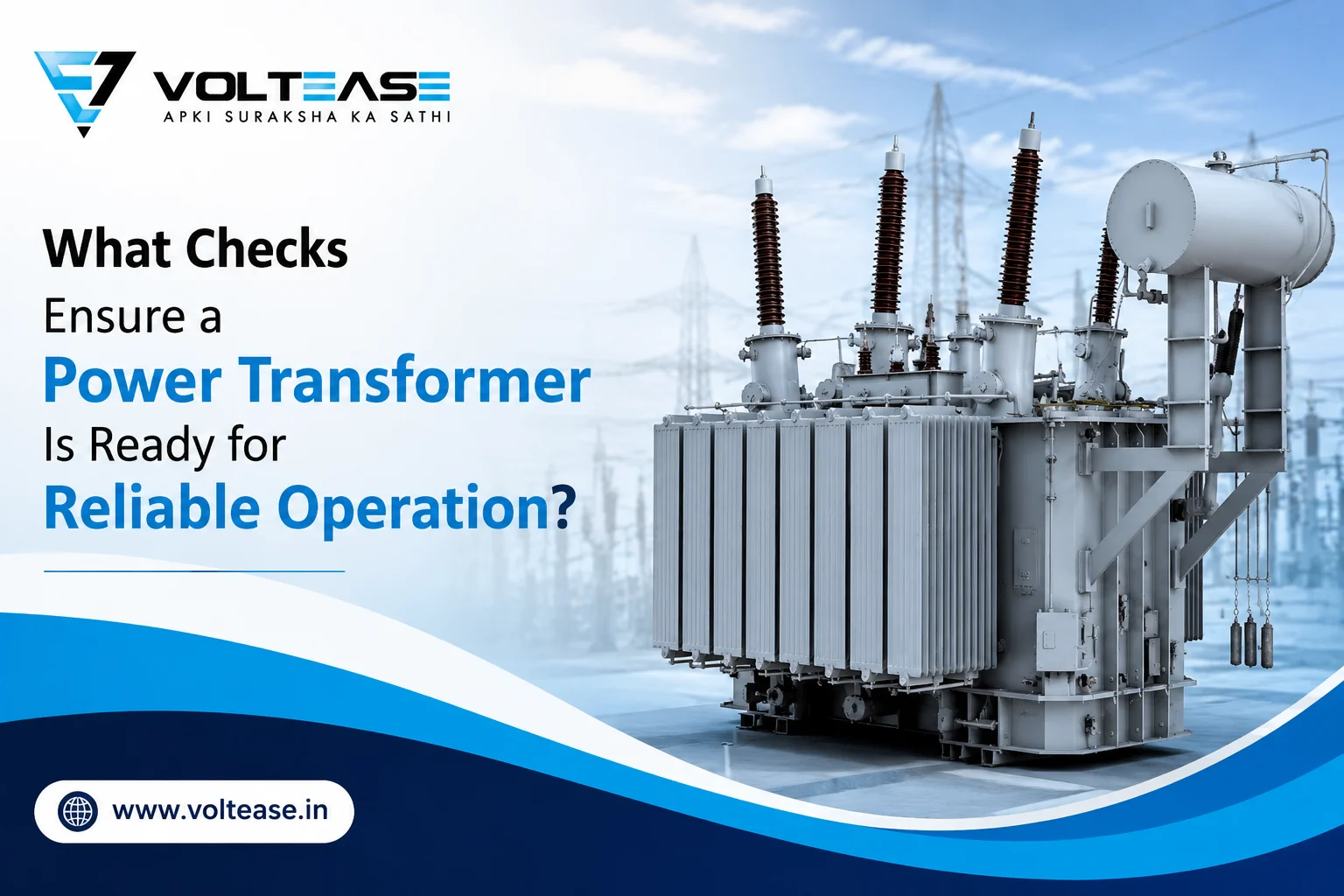
Buyers should verify whether the selected air-cooled or oil-cooled arrangement is appropriate for the expected load and surroundings. For oil-filled transformers, ask about oil quality testing, oil level, leakage checks, and associated cooling components. Do conduct a physical inspection for bushings, terminals, enclosure, fittings, and signs of transit or manufacturing damage.
Ask for Certifications and Documentation
One must never overlook these when finding the best power transformer manufacturers. Ask them about the routine or type test reports, applicable IEC or Indian Standard compliance documents, and current quality certifications. Presence of ISO 9001:2015 certification indicates an established quality-management system, while product-specific IEC or Indian Standard compliance should be checked according to the transformer type and application.
Conclusion
The right power transformer should be evaluated before it reaches the installation stage. Checking specifications, insulation, windings, turns ratio, protection, cooling, physical condition, and certifications, gives buyers a clarity on whether the transformer is ready to deliver reliable performance. If you are also planning to invest in power transformers for your industrial needs, we recommend choosing Voltease. Being one of the top power transformer manufacturers in India, we conduct all these checks and offer quality-tested & certified power transformers that are designed to meet different electrical requirements.
FAQs – Frequently Asked Questions
It helps assess insulation conditions and identify potential issues before the transformer enters service.
It verifies whether the primary-to-secondary voltage relationship matches the specified design.
Ask for current ISO 9001:2015 certification and applicable IEC or Indian Standard compliance documentation.
Requirements vary, but buyers may need overload, short-circuit, temperature, fault, and other application-specific protection.