
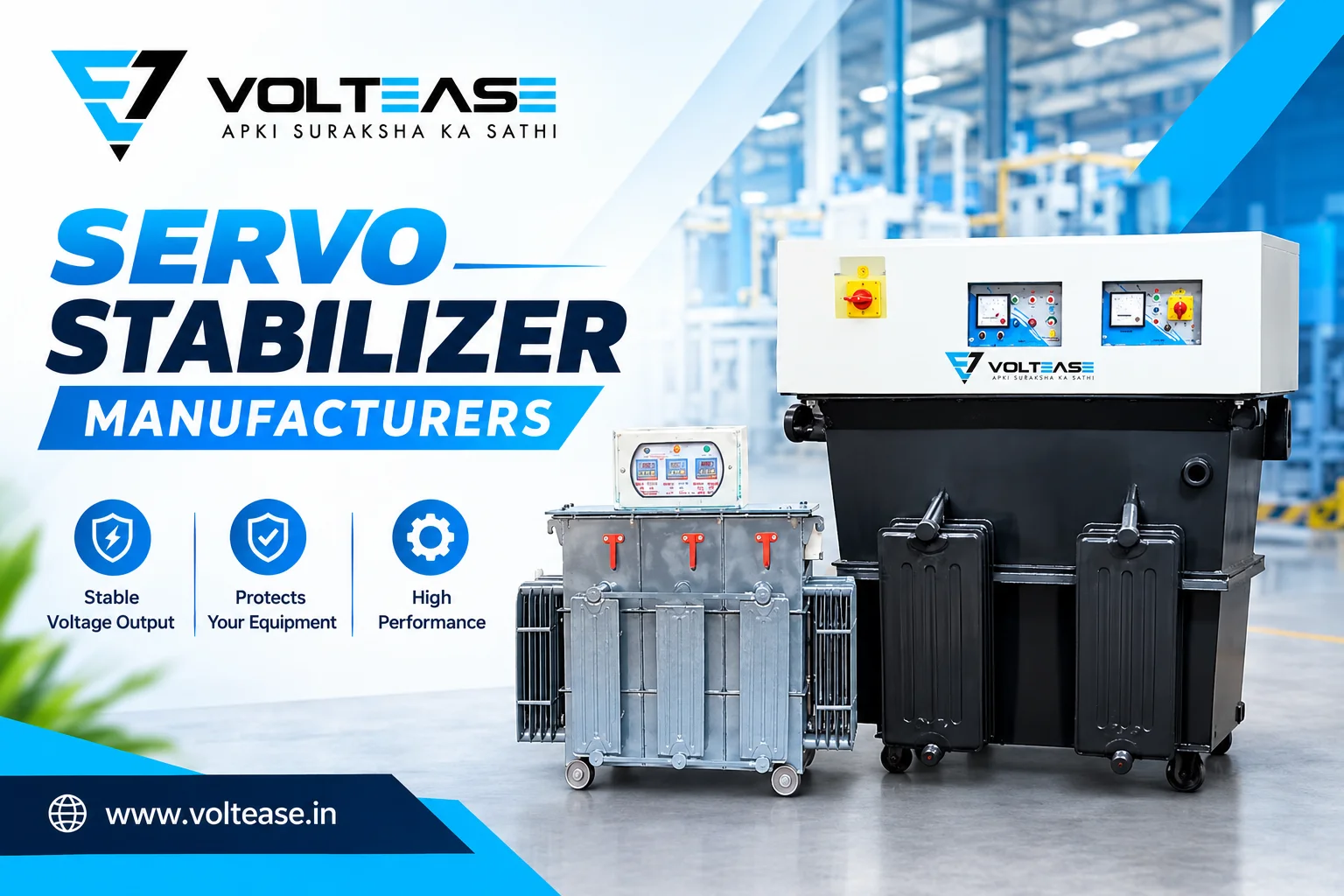
Servo stabilizers have become the first choice of most industries due to their excellent functioning and efficiency. Being one of the leading servo stabilizer manufacturers, we always recommend buyers to choose voltage stabilizers with servo motor technology to reduce voltage fluctuations and maintain productivity. However, we cannot deny that a servo stabilizer may also start showing problems due to several factors which most buyers are unaware of.
It may not work properly when it is connected to load heavier than its size. Or it may fail to operate due to an internal fault or unusual electrical conditions. All these signs look similar, but the reasons behind them are different. In this blog we are sharing what all buyers must check to determine the problem so that they can avoid unnecessary repairs and equipment downtime.
Frequent Overload Trips
If the stabilizer trips repeatedly when several machines operate together, its capacity may be insufficient for the actual load. This is especially common when new equipment has been added without reviewing the stabilizer’s rating or load capacity. However, frequent tripping does not always mean the unit is undersized. A faulty protection circuit, wiring issue or sudden increase in demand may also cause similar problems. One must check the load and call a professional for electrical inspection before deciding on a replacement.
Output Voltage is Not Staying Stable
A servo stabilizer should maintain its specified output voltage within its rated operating conditions. If the output keeps rising or falling despite relatively steady input voltage, an internal problem may be responsible. Possible causes include a faulty control circuit, worn carbon brushes or a servo motor problem. If the input voltage is outside the stabilizer’s specified correction range, the issue may instead be related to the incoming supply.
Unit Gets Unusually Hot
Stabilizers do get hot during operation, but excessive heating deserves attention. It may indicate continuous overloading, poor ventilation, loose electrical connections or an internal fault. Check whether the stabilizer has enough ventilation and whether its connected load has increased. Do not open the unit or touch internal electrical components yourself. Ask the servo stabilizer manufacturers if they provide after sales maintenance and repairing service or arrange an inspection by a qualified technician.
Machines Behave Differently During Peak Hours
Notice whether machines slow down, stop unexpectedly or show voltage-related errors when several loads run together. If the problem occurs mainly during peak operating hours, the stabilizer may be struggling with demand or the incoming supply may be dropping under load. Compare input and output readings during these periods. This helps distinguish a capacity problem from voltage fluctuations or another electrical issue.
What Should You Check Before Calling a Manufacturer?
Before you reach out to manufacturer or a technician, it is advised to keep a record of when the problem occurs and do make a note of all these:
- Connected load and any recently added equipment
- Input and output voltage readings
- Whether trips happen during machine startup or peak demand
- Warning indicators, unusual sounds or overheating
- Recent servicing and recurring faults
Conclusion
Frequent tripping, unstable output, overheating and unusual noise should not be ignored. An undersized stabilizer may need a capacity review, while a faulty unit requires proper diagnosis. Abnormal input voltage or changing load conditions may need attention elsewhere in the electrical system. Though when you buy them from reputed servo stabilizer manufacturers you need not worry about any of these as they offer complete maintenance and repairing service. We at Voltease being one of them always recommend checking the actual operating conditions before deciding whether repair, servicing or a different capacity is needed.
FAQs – Frequently Asked Questions
Repeated overload trips during normal production, particularly after adding equipment, may indicate insufficient capacity.
Yes, problems with the control circuit, servo motor or other components can affect output regulation.
No, input voltage outside the rated range, wiring faults and protection circuit problems can also cause trips.
Stop using it if overheating is severe or accompanied by a burning smell, smoke or unusual noise. Arrange a professional inspection.
Contact the manufacturer or service team if the unit trips repeatedly, gives unstable output or shows signs of overheating or mechanical trouble.