
By Faisal Siddiqui
If you run equipment in India and you think voltage fluctuation is not your problem — you’re gambling.
Not maybe.
You are gambling.
I’ve personally visited factories where a CNC stopped mid-job because voltage dipped for 4 seconds. I’ve seen a 2-ton AC compressor burn out in less than 8 months in a residential project in Surat. I’ve had customers call me after losing ₹3–4 lakhs in PCB damage.
And every single time the sentence is the same:
“Sir, kisi ne phle kabhi bataya hota toh laga lete.”
So let’s talk clearly here about what should have been said to you.
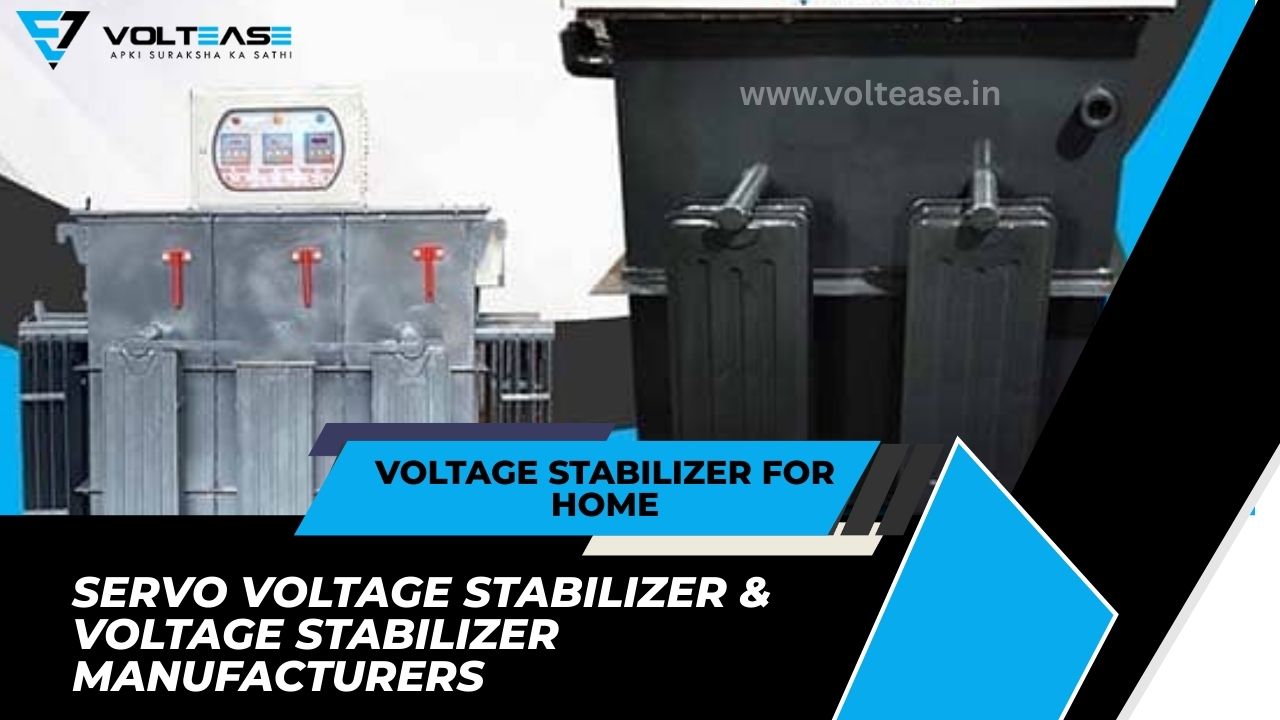
What Is a Servo Stabilizer? (In Real Terms)
A servo stabilizer is not a luxury product.
It is a protection device meant for controlling voltage.
That’s it.
If your incoming supply is unstable — say it swings between 160V and 280V — a servo stabilizer corrects it and gives your equipment a steady 230V (single phase) or 415V (three phase).
Think of it like this:
When water pressure is unstable, you install a regulator so pipes don’t burst.
Same logic. Different utility.
In simple Hindi:
“Bijli upar neeche ja rahi hai? Servo usko control karke seedhi supply deta hai.”
It doesn’t increase power. It doesn’t reduce your bill.
It protects.
Why Voltage Fluctuation Is a Silent Killer
Most people assume damage happens instantly.
It doesn’t.
It accumulates.
Low voltage: Motor draws higher current → heats up → insulation weakens.
High voltage: PCB components stress → capacitor life reduces.
Constant fluctuation: Equipment life drops quietly. It can reduce upto 30%.
You won’t notice in one week.
You’ll notice in 6–12 months — when repair cost is high and warranty is over.
Common victims I’ve seen:
● AC compressors
● Refrigeration units
● CNC machines
● Printing machines
● Medical lab analyzers
● Packaging lines and many more…..
Voltage doesn’t destroy loudly.
It destroys slowly.
How a Servo Stabilizer Actually Works (Without Engineering Jargon)
Inside a servo stabilizer, there are mainly four or five critical parts depending on the model:
● Servo motor
● Auto Variable Transformer ( mostly called Dimmer )
● Buck-boost transformer (present in some premium models, never in cheaper models)
● Control circuit
● Carbon brush assembly
Here’s what happens in real time:
Voltage changes →
Control circuit senses it →
Servo motor rotates →
Transformers adjusts output →
Stable voltage delivered.
This entire correction usually happens within seconds.
You don’t press anything.
It’s automatic.
But only if it’s properly designed and sized.
Who Actually Needs a Servo Stabilizer?
Let me make this practical.
1. Homes with noticeable fluctuation
If lights dim when AC starts, you already have fluctuation.
2. Shops running heavy machinery
Printing press Cold storage Garment units Medical labs
If your equipment investment is above ₹1 lakh, you should at least evaluate protection.
3. Factories
CNC Laser cutting Hydraulic presses Automated packaging
If production downtime costs you money per hour, voltage stability is not optional.
How to Check If You Really Have Fluctuation
Don’t rely on assumptions.
Install a digital voltmeter.
Monitor readings for 2–3 days at different times — especially peak hours.
You’ll be surprised how much it moves.
Most people say:
“Bijli toh theek hi aati hai.”
But they’ve never measured it.
Spikes are often short durations. Humans don’t notice them.
Machines do.
Mistakes I See Buyers Make
I’ll be blunt.
1. Buying undersized servo to save money
2. Choosing cheapest option online
3. Not checking input voltage range
4. Never Choosing Protection add ons just to save money
5. Not understanding warranty terms
6. Not asking right questions to their vendors
7. Only trusting on blind faith
A servo stabilizer is protection equipment.
You don’t negotiate protection quality like you negotiate a decorative item.
Going only for prices and specs on paper is the biggest mistake people make.
How I Tell Customers to Buy Smart
Step 1: Calculate total load in kVA properly Don’t estimate. Add actual load.
Step 2: Add 20–25% safety margin Future expansion happens.
Step 3: Confirm input voltage range Example: 150–270V? Or 300–480V?
Step 4: Ask direct questions:
Is the winding 100% copper? What grade copper? Is testing report available? What is correction speed?
What is the construction of the stabilizer? And many more. For that, you need to download our complete guide. Or you can watch it on our youtube channel
If answers are vague, that’s your signal.
Oil-Cooled vs Air-Cooled (Short Reality Check)
For small home applications — air-cooled can work.
For continuous industrial loads — oil-cooled is generally more stable long-term.
But selection depends on:
● Load pattern
● Duty cycle
● Installation environment
There is no one-size-fits-all.
My Final Advice
You don’t buy a servo stabilizer when everything is fine.
You install it so things don’t go wrong.
It is insurance for your equipment.
And insurance is always cheaper before damage.
If You Want Honest Guidance
At Voltease, our approach is simple:
Understand load. Understand voltage range. Recommend what is needed. Nothing extra.
No overselling.
If you’re unsure, send your load details and voltage range.
Better to ask before burning.
— Faisal Siddiqui
Voltease